Joint concept to involve residents
In FlashFloodBreaker we do not only organize hands-on trainings. In the background our partners develop longlasting and sustainable organizational solutions for communities. Lead by our partners SPW from Wallonia, EG, WRL, FW Duisburg, SDIS57, Uni.lu, ULiége and IWW jointly develop an awareness raising concept for residents of flash flood risk affected areas that is to be implemented in 4 different regions.
We aim to help create Territorial Resilience Networks, that are composed of civil society organizations, public authorities, private sector agents and residents, as well as non-humans on the territory. The aim is to reduce vulnerabilities, including those related to non-human systems (e.g. ecosystems, natural resources and infrastructure). Furthermore vulnerabilities that affect the territory entirely have to be identified.
3 core components
In the transnational exchange it is crucial to gain an joint understanding of the working definiton. So far there are three main components that define this approach towards Territorial Resilience Networks:
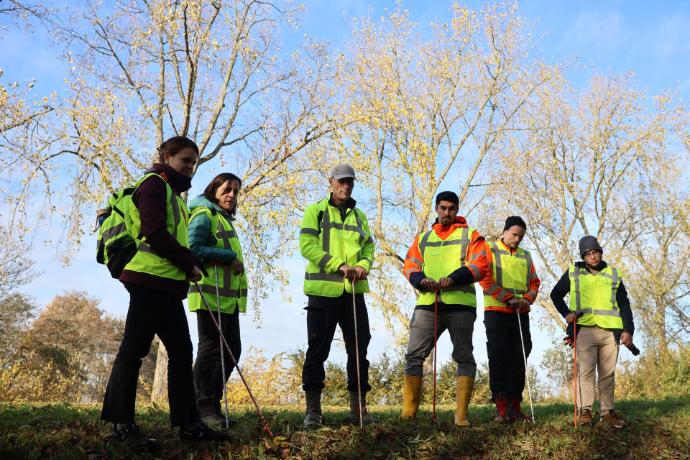
Collectively understanding, indentifying and reducing vulnerabilities
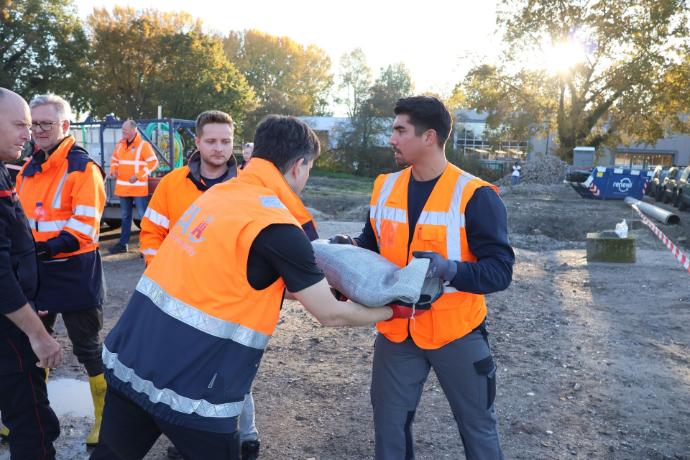
Absorbing and responding to crisis
Absorbing and responding to crisis
Supporting post-crisis recovery and transformation
Supporting post-crisis recovery and transformation
Since it is crucial to involve communities and talk about different methods of approaches, the partners used the transnational expertise to further develop the concept. Within the working sessions during our 6th Partner Meeting in Cork tools of how to involve residents as well as different methods were discussed and even practised with the partners. Community based approach, practical scenarios and board games were introduced and refined among the partners in order to develop them further.
The force of imagination for future developments
Imagining scenarios
Marleen Wilzing from the Netherlands (WRL) and Eva Ledroit from Belgium (SPW) led the session on how to involve residents by introducing a role play with different scenarios. Several questions were introduced and the participants were put in the situation to develop perspectives about whether they feel not reached, reached or closely reached.
In a second step they were invited to discuss their answers, rating the possibilty to participate in i.e. community trainings or informational events. By acting like personas the participants could bring in their expertise and the scenarios became a great tool to develop methods further.
During a rainy Thursday
You are immobile and currently in a wheelchair due to a recent hip transplant. You live together with your partner in a spacious house just outside the city. You rely on your partner for errands and movement.
Your are a father of six kids, some of them are quite young, others about to finish school soon. Your are at home and take care of them.
Your are a young adult and go to university
Develop augmented / virtual reality (AR/VR) and immersive technologies
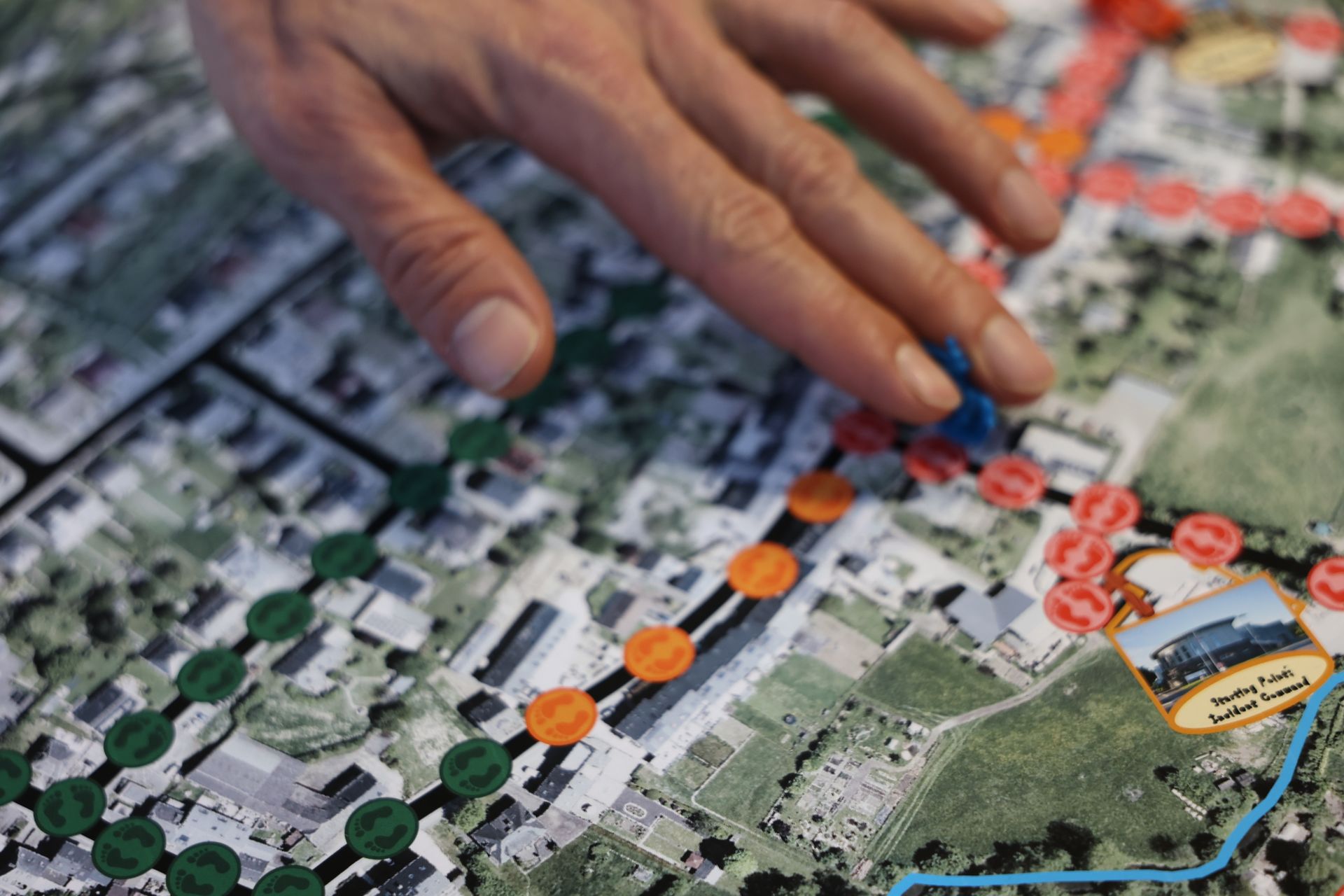
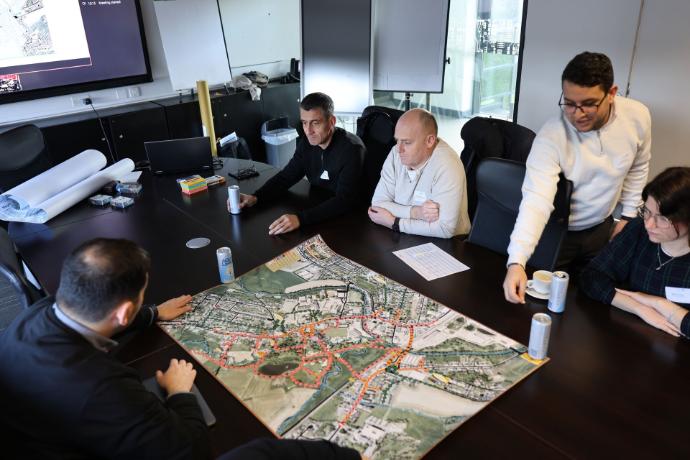
Adile Nassou from University of Luxembourg (Uni.lu) has developed immersive technologies to raise awareness and improve preparedness for flash floods. The key output presented was a Flash Flood Escape Game:
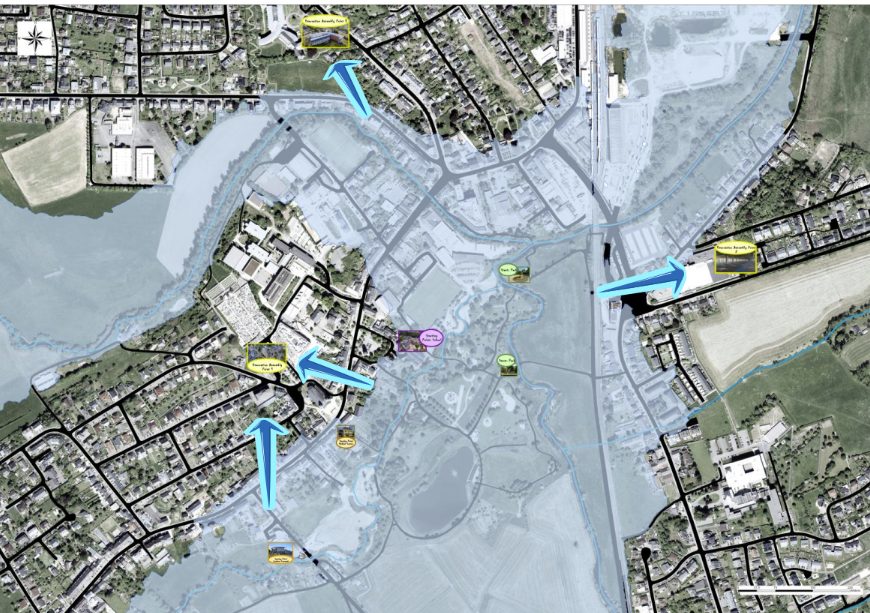
A cooperative board game simulating flood scenarios to collect behavioral insights and inform AR/VR design. Therefor he made use of geospatial data, field surveys, and expert-informed scenarios.
Imagining an escape to safety
An escape game in real time conditions developed by professionals and survivors
Furthermore Adile Nassou introduced an Indoor AR Water-Level Prototype: A Unity-based AR tool that overlays flood water levels in real indoor spaces using ARCore/Android devices.
Imagining flooding via VR
The AR system uses the camera to calculate geometry, scan the room, and accurately identify the physical tracking plane and boundaries. Once the room geometry is measured and firmly identified, the Unity engine introduces the digital water assets directly into the scene. The generated water meshes cover the detected physical space, preparing the environment for precise depth simulation.
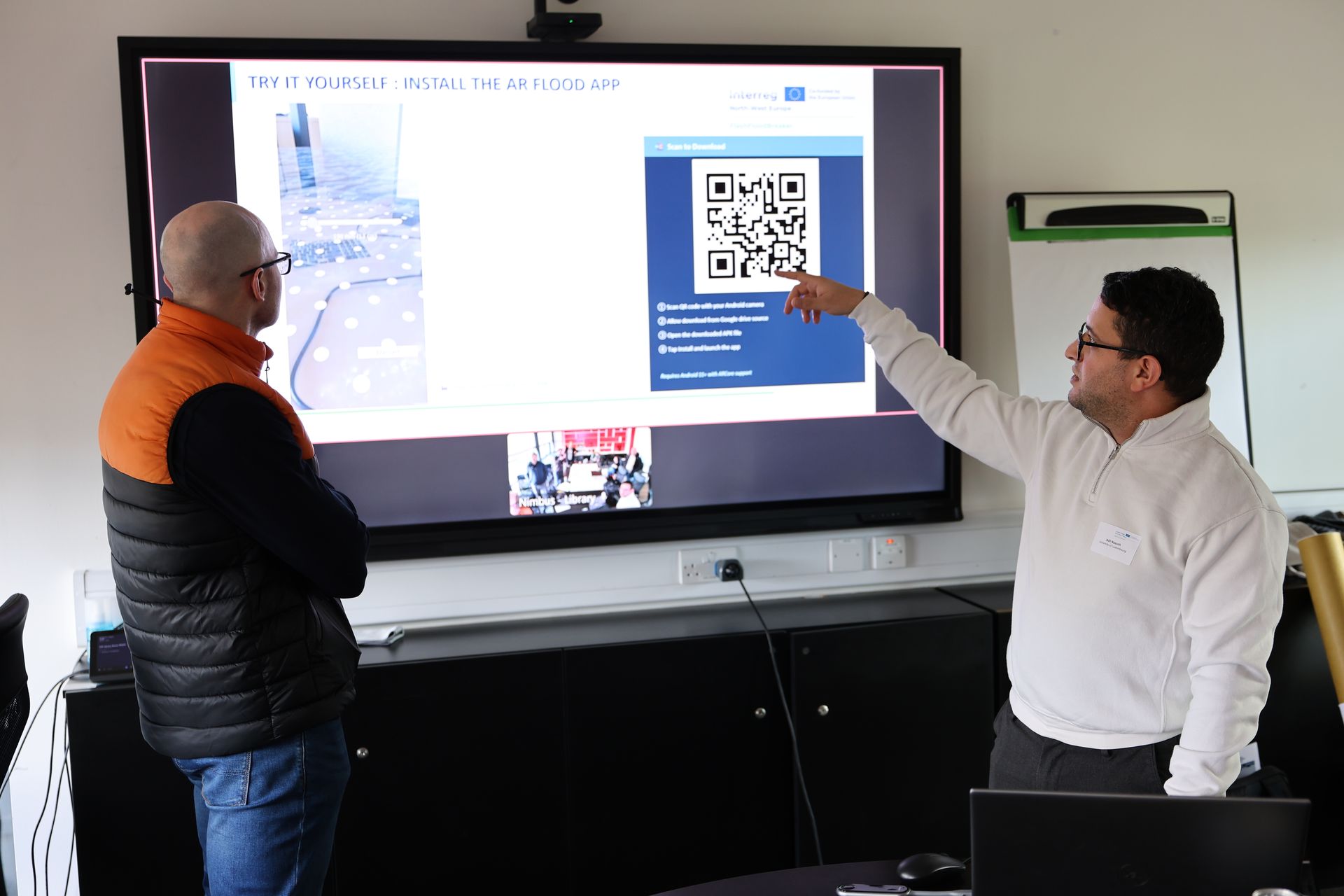
During the upcoming months partners from Uni.lu will compile game data, develop AR/VR prototype, launch pre-surveys, and coordinate with local authorities. The partners will identify local citizens for pilot testing and connect Uni.lu with regional emergency responders. The feedback is crucial and will be integrated in the development.
Then by September 2026 a prototype will be tested, pre-survey results will be analized and a first citizen pilot will be completed.
This great tool will help to raise awareness of individual risk and therefor hopefully foster self preparation and therefor resilience among non professionals. More details to be published on this website soon...